 Bowling Alley Equipment Manufacturer |Duckpin Bowling,Mini Bowling,Turnkey Bowling | Red sun
Noise & Vibration Reduction Guide for Bowling Alley Installations
Noise & Vibration Reduction Guide for Bowling Alley Installations on Upper Floors
Installing bowling lanes on upper floors often causes noise and vibration complaints from downstairs tenants. We share practical soundproofing solutions using rubber anti-vibration pads, rock wool insulation and OSB lane frames based on our real construction cases.
Why Upper-Floor Bowling Projects Face Severe Noise Problems
Bowling generates two main types of unwanted sound that spread through building structures:
- Airborne noise: Sharp cracking sounds from falling bowling pins, cheers from players, and lane machine operating noise that travels straight through open air.
- Structure-borne vibration noise: Heavy thuds when bowling balls hit the lane surface, continuous frame vibration from automatic pin setters. These shocks transfer via wood frames, floor slabs, and building columns to rooms on lower floors.
Upper concrete floor slabs have weaker natural vibration isolation compared to ground-level foundations, so even regular bowling play can create noticeable rumble for residents or shops underneath your bowling space without proper upgrades.
Practical Step-by-Step Noise Reduction Build Process (Matched With On-Site Construction Cases)
Step 1: Lay anti-vibration rubber pads at all frame contact points (base layer vibration blocking)
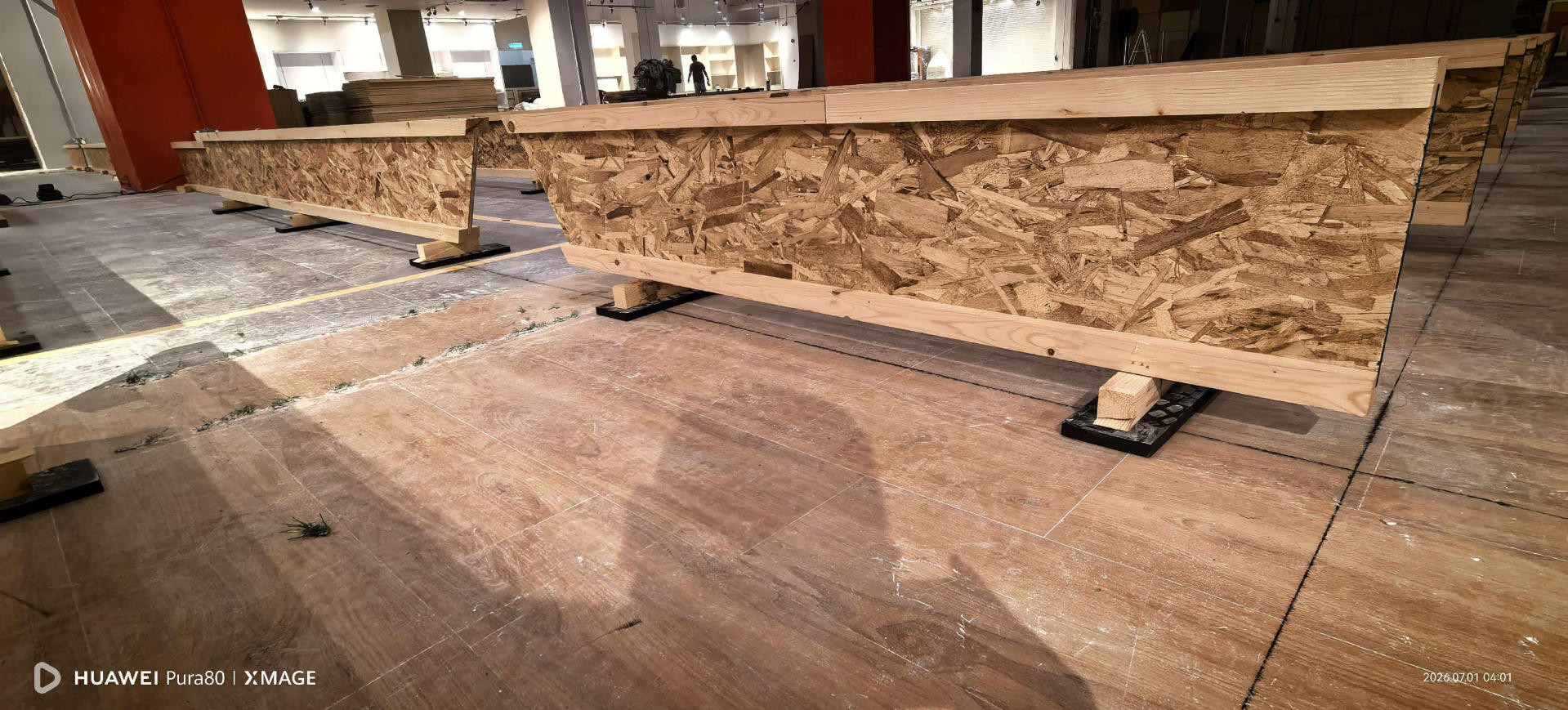
As seen in the side view of finished bowling lane frames, every wooden support leg under the lane assembly sits atop thick solid rubber anti-vibration pads. This is your first and most critical defense against structure-borne shock.
- Pick high-density natural rubber pads with a Shore hardness rating of 40–50; avoid cheap foam padding that compresses flat after months of heavy bowling use.
- Fit one rubber pad under every single support foot of the bowling lane subframe, do not skip any contact spot. The rubber dissipates most downward mechanical shock before vibration reaches the concrete floor slab.
- For high-traffic commercial bowling venues, upgrade to laminated rubber pads with multiple rubber layers for better long-term vibration dampening.
Step 2: Fill hollow frame cavities with dense mineral wool for internal sound absorption
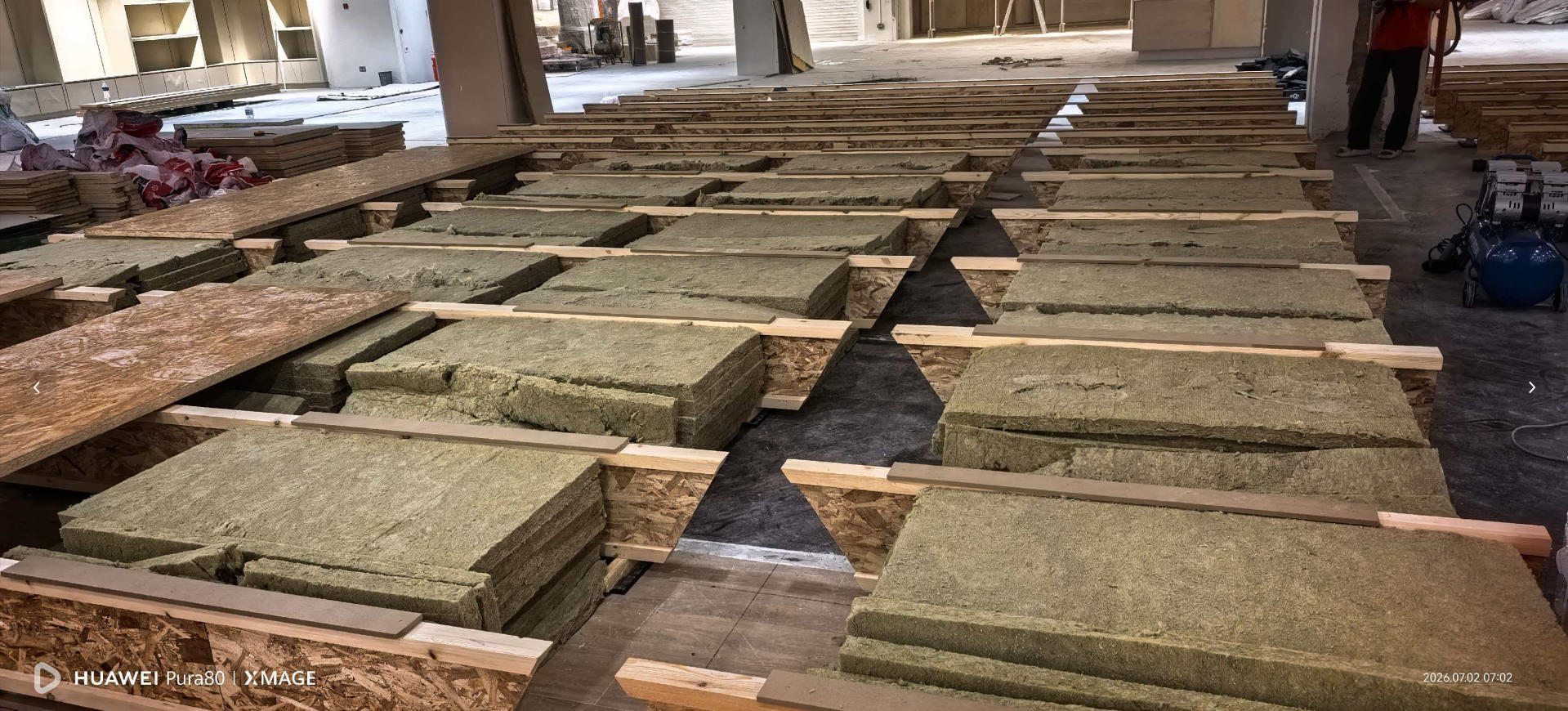
The top-down construction photo displays stacks of thick rock wool prepped to pack the empty inner cavity inside each wooden bowling lane frame. This material targets airborne noise trapped inside the frame assembly:
- Use 80–100kg/m³ density rock wool (stone wool), the same product used in our job site. Tightly pack all hollow gaps inside the OSB-faced lane frame. The porous fiber structure soaks up pin collision echo bouncing inside the frame box, stopping internal noise from amplifying and radiating outward.
- Seal minor gaps around wool fills with thin acoustic sealant, to eliminate sound leakage through small open cracks. Do not leave loose large air pockets inside the frame cavity.
Step 3: Upgrade lane deck layers for extra surface sound deadening
After packing cavity insulation, place a thin rubber acoustic mat between the top OSB panel and the final finished bowling lane deck. This layer softens direct bowling ball impact on the top wood surface, cutting down loud hollow thud sounds produced by ball strikes.
For premium bowling venues, you can add a thin closed-cell foam sheet between OSB sheathing and structural timber beams to weaken vibration transfer between connected wooden frame members.
Step 4: Supplement perimeter slab treatment for hard-to-block low-frequency rumble
Low deep rumble from heavy pin setter machinery is hard to eliminate only with frame-mounted upgrades. For multi-story buildings with strict noise limit rules:
- Lay a continuous floating floor rubber mat across the whole bowling room concrete slab before placing lane subframes. This creates a full decoupled floor layer that stops wide-range slab vibration spread.
- Seal wall-floor joints with flexible acoustic caulking. Rigid hard cement filler will become a solid sound bridge that lets vibration bypass your padded upgrades.
Common Cost-Saving Mistakes To Skip
- Only installing surface ceiling acoustic tiles on the floor below: ceiling panels only reduce airborne echo, they cannot stop low-frequency structure rumble passing through solid concrete slabs.
- Using low-density cheap fiberglass wool for frame cavity filling: soft low-density insulation delivers poor absorption for the mid-high frequency noise created by striking bowling pins.
- Spacing out rubber pads and omitting support foot padding: a single unpadded hard wood-to-concrete contact spot will act as a strong sound bridge, drastically lowering the overall noise blocking performance of your whole setup.
Real-World Outcome Reference From On-Site Builds
When you combine properly fitted rubber anti-vibration foot pads, dense rock wool cavity packing, and top-surface acoustic mats for standard commercial bowling lanes on upper building floors: airborne pin strike noise will drop by roughly 18–25 decibels, while bothersome low-frequency structural rumble noticeable on lower floors gets reduced by 20–30 decibels. Done correctly, regular daytime bowling operation will not generate disruptive noise for spaces on lower building levels.
Closing Note
Noise control for elevated bowling alley builds does not need overly complicated specialized construction. Stick to the core logic: block downward vibration transfer first via rubber decoupling pads, then absorb internal echo with dense mineral wool fills, and patch leftover sound leakage points. This budget-friendly field-proven method consistently resolves noise complaints for bowling operators running venues on upper building floors.